AI in Dentistry: How Artificial Intelligence Is Helping Patients and Dentists in Unionville
Artificial intelligence (AI) is changing the way we deliver dental care — and for the better. In this article, we explain how AI improves diagnosis, streamlines treatment planning, and helps tailor care to each patient. You’ll learn which technologies are driving these changes and how they benefit both patients and dental teams. As modern practices look to raise the standard of care, AI is an important tool for solving everyday challenges in diagnostics, planning, and follow-up. We’ll also look at what this means for patient outcomes and what the future might hold for oral health.
What Is AI in Dentistry and How Does It Enhance Oral Care?
AI in dentistry means using smart software — like machine learning, computer vision, and natural language processing — to support clinical work and office operations. These tools help dentists analyze more information faster, which leads to clearer diagnoses and treatment plans that fit each person’s needs.
By speeding up routine analysis, AI gives dental teams more time to focus on patients. For example, AI-powered tools can flag early signs of disease on X-rays so we can act sooner. As practices adopt these technologies thoughtfully, they can raise care quality while working more efficiently for patients and staff alike.
How Does Artificial Intelligence Improve Dental Diagnostics?
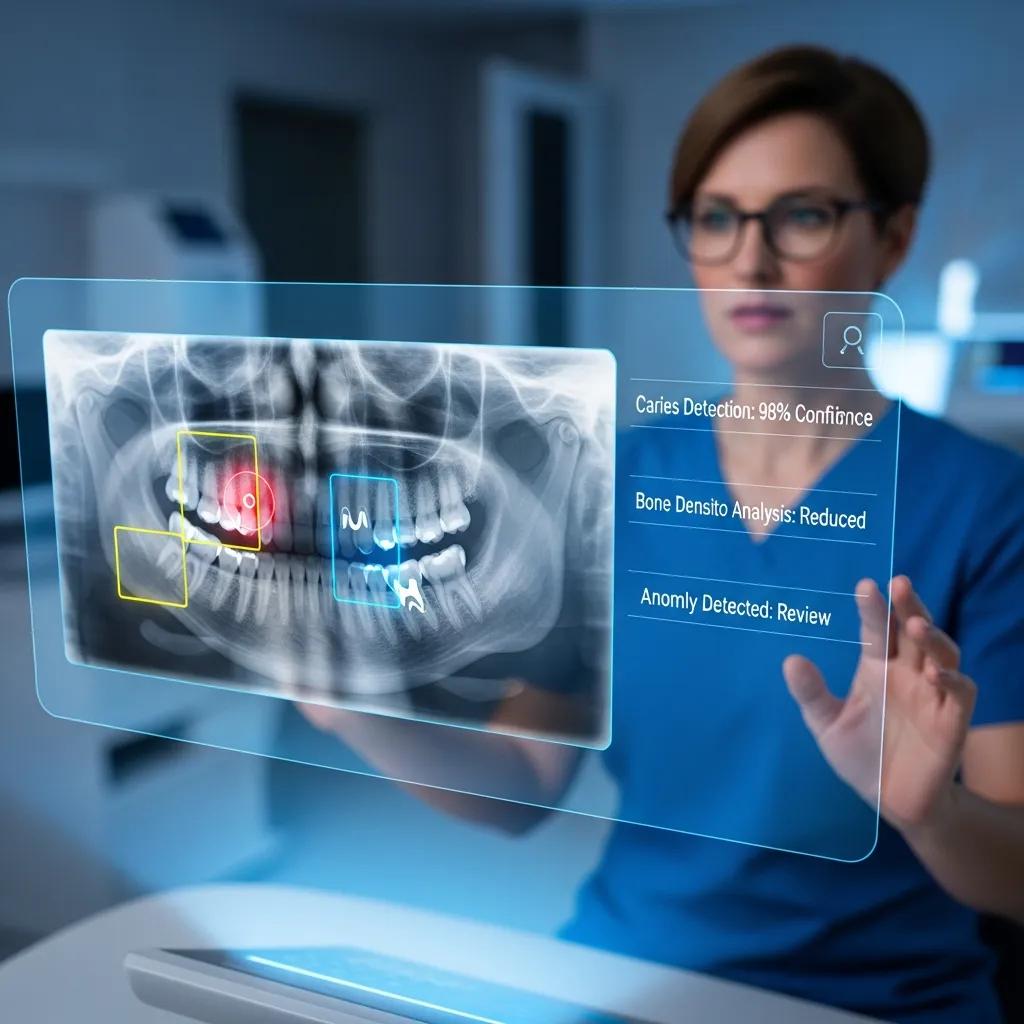
AI helps diagnostics by running advanced algorithms on dental images and clinical data. These systems can spot small changes or patterns that are easy to miss, supporting earlier and more accurate diagnoses. For instance, AI can review X-rays and help identify cavities, gum disease, and other issues with strong consistency.
AI also works quickly — what used to take extra review time can now be flagged almost instantly. Faster analysis means faster decisions and, often, better outcomes for patients.
What Are the Key AI Technologies Used in Dental Care?
Several AI technologies are making a difference in dentistry today:
- Machine Learning: Systems that learn from clinical data to improve detection and prediction over time — for example, spotting trends in imaging or patient histories.
- Computer Vision: Tools that interpret visual data from X-rays and 3D scans, helping detect problems that may not be obvious at first glance.
- Natural Language Processing: Software that helps organize and extract meaning from notes and records, improving communication and record keeping.
Together, these technologies form an ecosystem that supports more reliable, personalized care.
How Does AI-Powered Dental Diagnostics Improve Patient Outcomes in Unionville/Markham?
AI-driven diagnostics can make a real difference for patients here in Unionville and Markham. When AI is used to support clinical decisions, diagnoses tend to be timelier and more precise — which leads to clearer treatment plans and higher patient satisfaction.
Which Dental Conditions Can AI Detect Early?
AI can help detect a number of conditions at earlier stages, including:
- Cavities: Early decay can be picked up on X-rays before symptoms appear, allowing for less invasive care.
- Periodontal Disease: AI can assist in assessing gum and bone changes so we can intervene sooner.
- Oral Cancer: With careful use, AI can flag suspicious findings in imaging and photos for closer clinical review.
Earlier detection means simpler, more effective treatment and better long-term oral health.
How Does AI Analyze Dental Imaging for Accurate Diagnosis?
AI evaluates dental images using a step-by-step process that boosts accuracy:
- Image Acquisition: We capture clear images with digital X-rays or 3D scans.
- Preprocessing: Images are enhanced to highlight key details for analysis.
- Analysis: AI algorithms search for patterns and anomalies, comparing findings to large databases.
- Reporting: The system prepares a clear report that the dental team reviews and uses to plan care.
This workflow supports better diagnostic decisions while saving time in the clinic.
How Is AI Revolutionizing Personalized Treatment Planning in Dentistry?
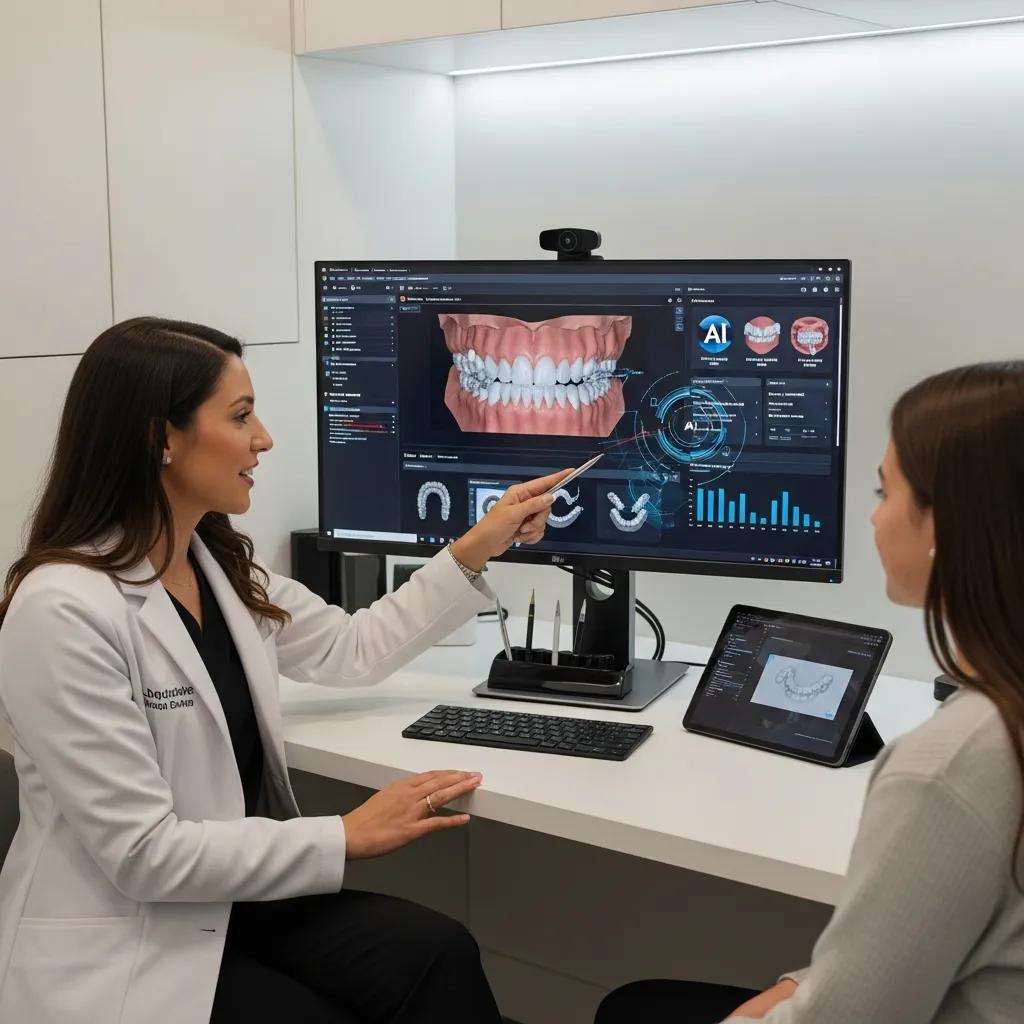
AI helps create treatment plans that are tailored to each person’s mouth, health history, and treatment goals. That personalization can improve success rates and patient satisfaction while making care more predictable.
How Does AI Assist in Orthodontic and Invisalign Planning?
In orthodontics, AI can simulate tooth movement and forecast how treatment may progress. These simulations help orthodontists fine-tune plans and show patients realistic expectations. For Invisalign and other aligner therapies, AI can help design aligners and anticipate how teeth will shift, which supports efficient, accurate treatment.
What Role Does AI Play in Prosthetic and Restorative Dentistry?
In restorative work, AI contributes to more precise planning and better-fitting restorations. By analyzing oral scans and patient data, AI can suggest optimal designs and materials for crowns, bridges, and dentures — helping shorten chair time and improve comfort and function.
That level of customization leads to smoother procedures and outcomes patients appreciate.
In What Ways Does AI Enhance Preventive Dentistry and Oral Health Monitoring?
AI supports prevention by helping monitor oral health and nudging patients toward better daily care. These tools empower patients and reduce the chance of more serious problems down the road.
How Can AI Provide Personalized Oral Hygiene Recommendations?
AI can use a patient’s history and habits to recommend practical oral hygiene steps, like targeted brushing techniques, flossing tips, or dietary adjustments. These tailored suggestions make daily care more effective and easier to follow.
Small, personalized changes add up and help prevent bigger issues later on.
What AI Tools Help Assess Risk for Dental Diseases?
Several AI-driven tools help assess risk and guide prevention:
- Risk Assessment Software: Analyzes records to highlight individual risk factors for cavities and gum disease.
- Predictive Analytics: Estimates the likelihood of future problems so we can intervene early.
- Monitoring Apps: Mobile tools that track habits and offer reminders or feedback to support better home care.
Using these tools, dental teams can focus preventive efforts where they’ll make the most difference.
How Does AI Improve Patient Experience and Practice Management at Unionville Gate Family Dentists?
At Unionville Gate Family Dentists, AI helps us run smoother clinics and keeps communication clear and timely. That means fewer administrative hassles and more time for hands-on care.
What Are Virtual Dental Assistants and Chatbots?
Virtual dental assistants and chatbots handle routine patient questions, appointment bookings, and reminders. They make it easier for patients to get quick answers and free up our team to focus on care that needs a human touch.
Automating simple tasks keeps the practice efficient and improves the overall patient experience.
How Does AI Enhance Patient Communication and Appointment Scheduling?
AI tools personalize messages and send appointment reminders, follow-up instructions, and check-ins. Smart scheduling systems can also suggest appointment times that reduce wait times and fit patients’ availability — helping the whole day run more smoothly.
What Is the Future of AI in Dentistry and Its Ethical Considerations?
The future of AI in dentistry is full of potential, but it also raises important ethical questions. As these tools become more common, thoughtful use and clear safeguards will be essential.
Which Emerging AI Technologies Will Shape Dental Care?
New imaging techniques, improved predictive analytics, and tighter integration between devices and records are likely to push care forward. These advances aim to make diagnostics more precise and treatment plans more individualized.
When paired with good clinical judgment, these innovations can make dental care safer and more effective.
Will AI Replace Dentists or Complement Their Expertise?
AI won’t replace dentists — it will complement them. These tools provide extra insight and support, but skilled clinicians remain essential for diagnosis, treatment decisions, and compassionate care. The best results come from combining human expertise with thoughtful AI assistance.
Together, clinicians and AI can deliver higher-quality care while keeping patients at the center of every decision.
Frequently Asked Questions
What are the potential risks associated with AI in dentistry?
AI brings benefits, but it also comes with risks we watch closely. Data privacy is a top concern since sensitive patient information may be involved. Overreliance on AI without clinical oversight can also be risky, so human review remains essential. Finally, adopting AI requires staff training and thoughtful workflows to ensure safe, effective use. Addressing these areas helps practices use AI responsibly.
How can patients ensure their dental practice is using AI responsibly?
Ask your dental team what technologies they use and how those tools improve care. Inquire about data protection and whether AI findings are reviewed by a clinician. Clear answers from your provider build trust and help you feel confident in how AI is used in your care.
What training do dental professionals need to effectively use AI technologies?
Dental teams need training in how AI works, how to interpret its outputs, and how to fit tools into clinical workflows. Many dental schools and continuing education programs now include AI topics, and hands-on workshops or vendor training help teams use these tools safely and effectively.
How does AI impact the cost of dental care?
Upfront costs for AI tools and training can be significant, but over time practices often gain efficiencies that lower operating costs. Early detection and more efficient workflows can also reduce the need for more expensive treatments later — a potential long-term benefit for patients and practices alike.
What ethical considerations should be addressed with AI in dentistry?
Key ethical issues include patient consent, data privacy, and algorithm bias. Practices should explain how AI is used and secure informed consent. Ensuring AI systems are trained on diverse data helps reduce bias and improves accuracy for different patient groups. Ongoing oversight and ethical discussion are important as these tools evolve.
How can AI improve patient education in dentistry?
AI can tailor educational material to each patient’s needs, offering clear tips on oral hygiene, treatment options, and prevention. Virtual assistants can answer common questions quickly, helping patients stay informed and engaged with their care. Better information leads to better decisions and healthier outcomes.
Conclusion
AI is helping dentistry become more accurate, more personalized, and more efficient. When used responsibly, these tools improve diagnostics, streamline care, and empower patients to stay on top of their oral health. At Unionville Gate Family Dentists, we embrace technologies that support better outcomes while keeping clinical judgment and patient comfort front and center. Learn more about how our services put thoughtful innovation to work for you.