Professional Teeth Whitening in Markham — Safe, Effective, Affordable
A brighter smile can make a big difference to how you feel. At Unionville Gate Family Dentists and throughout Markham, professional teeth whitening is a trusted way to reduce stains and lift tooth colour safely. This guide walks you through the main options, what to expect, how much treatments usually cost, and simple aftercare tips — so you can choose the approach that fits your needs and lifestyle. Whether you prefer an in-office session or a custom take‑home kit, we explain the steps and benefits clearly.
What Are the Best Professional Teeth Whitening Treatments Available in Markham?
Markham dental clinics offer several professional whitening approaches to suit different goals. The most common are in‑office whitening, custom take‑home trays, and laser‑assisted treatments. Each method removes surface and deeper stains in different ways, so the right choice depends on how quickly you want results, your sensitivity levels, and your daily routine.
How Does In-Office Teeth Whitening Work and What Are Its Benefits?
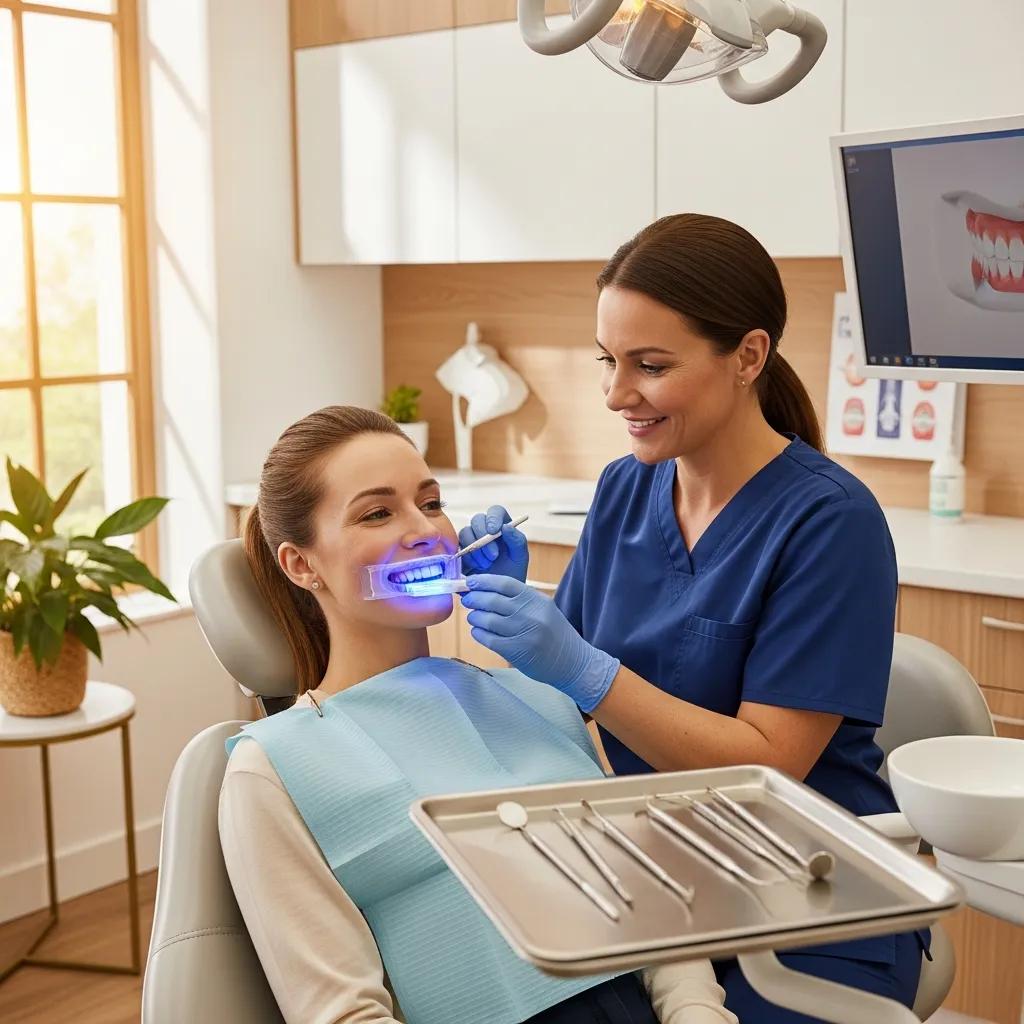
In‑office whitening is popular because it delivers noticeable results in a single visit under direct supervision. A clinician applies a professional‑strength whitening gel and may use a light or laser to speed the process. The advantages are fast whitening, carefully controlled application, and immediate guidance from your dental team — ideal if you want a safe, predictable improvement before an event or simply for confidence.
At a basic level, whitening relies on chemical reactions that break stain molecules apart so teeth look visibly lighter.
How Chemical and Physical Whitening Methods Work: Efficacy and Safety
Chemical whitening depends on oxidation‑reduction reactions, most commonly using hydrogen peroxide or carbamide peroxide, to lighten tooth colour by breaking down chromogenic molecules in enamel and dentin. This review compares physical and chemical whitening methods for effectiveness, safety, how long results last, and patient satisfaction.
Physical and chemical methods of tooth whitening, 2025
What Are the Differences Between Laser Whitening and Bleaching Procedures?
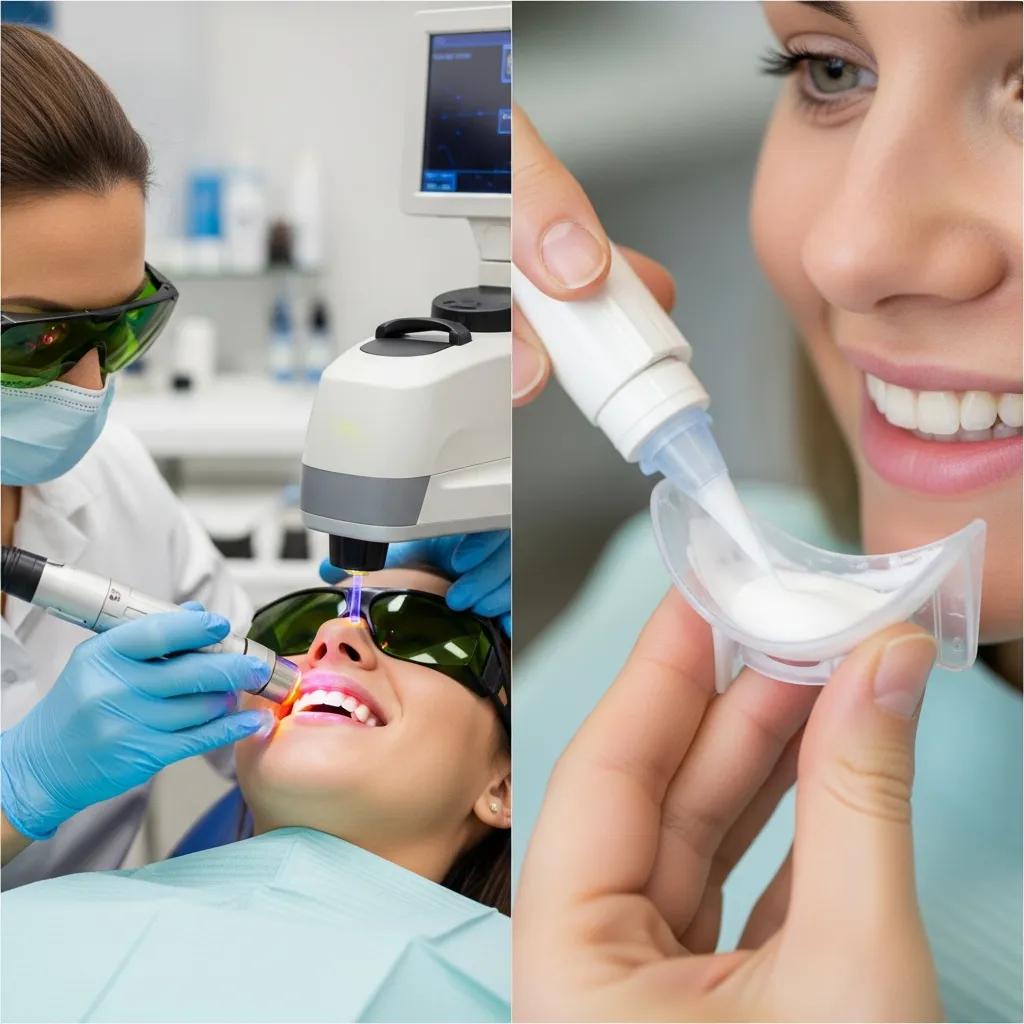
Laser whitening uses focused light to potentially enhance the whitening gel’s effect, which can shorten treatment time and intensify results. Traditional bleaching relies on carefully applied gels over a longer period and can be just as effective with proper technique. Deciding between them comes down to how fast you want change, your tolerance for sensitivity, and advice from your dentist.
How Safe Are Teeth Whitening Options Offered by Markham Dental Clinics?
Safety is a top priority. When performed by qualified dental professionals, whitening treatments offered across Markham are generally safe and designed to limit side effects. Before any whitening, your dentist will review your oral health so we can address issues like cavities or gum problems first and choose the gentlest, most effective approach for you.
What Are the Common Side Effects and How Can They Be Minimized?
The most common side effects are temporary tooth sensitivity and mild gum irritation. These usually fade within a few days. To reduce discomfort, follow your clinician’s pre‑ and post‑treatment instructions, use desensitizing toothpaste as recommended, and discuss slower or lower‑strength options if you have a history of sensitivity.
Research shows sensitivity varies by treatment type, so choosing the right protocol matters.
Comparing Tooth Sensitivity After Professional and At‑Home Whitening
Across whitening treatments, tooth sensitivity scores rose significantly after procedures (p<0.05). The largest increase was seen with 40% hydrogen peroxide in‑office treatments, while the smallest increase occurred with 10% carbamide peroxide at‑home treatments (p<0.05).
Patients’ assessments of tooth sensitivity increase one day following different whitening treatments, D Illeš, 2021
Who Is Eligible for Professional Teeth Whitening Treatments?
Most people with healthy teeth and gums are good candidates for whitening. If you have untreated decay, active gum disease, or exposed roots, those issues should be managed first. During a consultation we’ll evaluate your dental health and recommend the safest, most effective option for your situation.
What Is the Cost of Teeth Whitening in Markham and Are There Financing Options?
Whitening prices in Markham vary by method. In‑office treatments typically range from CAD $300 to $600, while custom take‑home kits usually cost between CAD $150 and $300. Many clinics — including ours — offer payment plans or financing to help make treatment more accessible.
How Do Prices Compare Between In-Office and Take-Home Whitening Kits?
In‑office whitening is often pricier because of professional supervision and faster results. Take‑home kits are more budget‑friendly and let you whiten at your own pace. Both can be effective when used as directed; your dentist can help you weigh cost versus convenience and expected outcomes.
Are There Affordable Teeth Whitening Packages for Families?
Some clinics in Markham offer family packages or promotional pricing to make whitening more affordable for multiple people. These options can be a great value when several family members want to refresh their smiles around the same time.
How Should Patients Prepare for Their Teeth Whitening Appointment in Markham?
Preparing well helps you get the best outcome. We recommend a professional dental cleaning before whitening to remove plaque and tartar so the whitening agent reaches tooth surfaces evenly. Bring any questions to your appointment so your team can tailor the plan to your needs.
What Pre-Treatment Steps Ensure Optimal Whitening Results?
For best results, avoid strongly staining foods and drinks — like coffee, tea, and red wine — for at least 24 hours before treatment. Keep up regular brushing and flossing, and follow any instructions your dental team gives you about pre‑treatment care.
Are There Any Dental Conditions That Require Attention Before Whitening?
Yes. Cavities, gum disease, large restorations, or significant enamel wear should be treated before whitening. Book a consult so your dentist can assess and, if necessary, complete any recommended restorative work first to protect your oral health and the longevity of whitening results.
What Are the Best Practices for Aftercare and Maintaining Whitened Teeth?
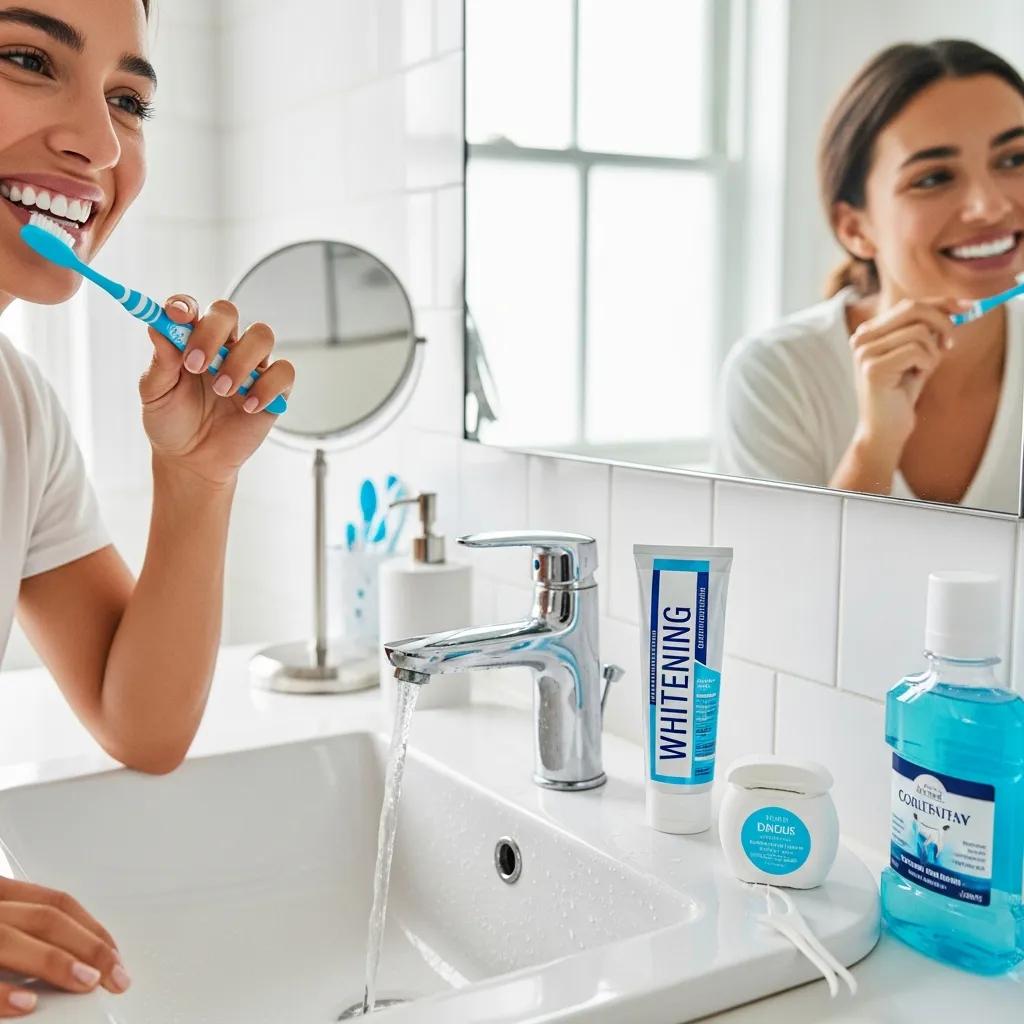
Aftercare plays a big role in how long your whitening lasts. Simple habits and follow‑up care will help preserve your new shade and reduce future staining.
How Long Do Professional Teeth Whitening Results Typically Last?
Results vary by person but generally last from about six months up to two years. Diet, oral hygiene, smoking, and regular dental cleanings all affect longevity. Many patients choose touch‑ups or at‑home maintenance kits to extend their results.
What Lifestyle Habits Help Preserve a Bright Smile?
To keep your smile bright after whitening, try these easy habits:
- Avoiding Staining Foods and Beverages
: Cut back on coffee, tea, red wine, and richly coloured sauces to reduce re‑staining. - Practicing Good Oral Hygiene
: Brush twice daily and floss to prevent plaque that can dull your teeth. - Using a Straw
: When you drink staining beverages, a straw helps limit contact with front teeth.
These simple steps make a meaningful difference in keeping whitening results looking fresh.
What Do Patients Say About Teeth Whitening Services at Unionville Gate Family Dentists?
Patient feedback helps us refine care. Many people report being pleased with the improvement in colour and the confidence boost that follows professional whitening performed by our team.
Which Testimonials Highlight Patient Satisfaction and Treatment Success?
Reviews from our patients often mention noticeable results, gentle care for sensitive teeth, and a friendly, professional staff. Those comments reflect the practical and personal value people find in professional whitening.
Research supports that improving tooth colour is a leading aesthetic concern for patients seeking dental care.
Patient Satisfaction and Desire for Whitening: How Appearance Drives Demand
In this study most patients were dissatisfied with their dental appearance, with a higher percentage of females reporting dissatisfaction. Concerns about tooth colour and perceived prominence of teeth negatively affected overall satisfaction. Tooth whitening was the most requested aesthetic treatment (48.1%).
Factors influencing patient satisfaction with dental appearance and treatments they desire to improve aesthetics, N Saddki, 2011
How Do Before-and-After Photos Demonstrate Whitening Effectiveness?
Before‑and‑after photos are a useful way to set realistic expectations and show potential improvements. They illustrate typical results and help you and your dentist decide which approach best matches your goals.
Frequently Asked Questions
What is the difference between at-home and professional teeth whitening?
At‑home whitening kits usually use lower concentrations of whitening agents and produce gradual change over days or weeks. Professional in‑clinic treatments use stronger, carefully applied products for faster results and are overseen by a dentist. Consider budget, timing, and sensitivity when choosing; your dental team can recommend the right option for you.
How often can I undergo professional teeth whitening treatments?
Frequency depends on the method and your oral health. As a general rule, wait six months to a year between in‑office sessions to protect enamel and reduce sensitivity risk. Follow manufacturer and clinician guidance for at‑home kits and check in with your dentist before repeating treatments.
Can teeth whitening treatments cause long-term damage to my teeth?
When done under professional supervision, whitening is considered safe and should not cause lasting harm. Overuse or unsupervised application of whitening products can increase sensitivity or risk enamel wear. Stick to your dentist’s recommendations and schedule regular checkups to monitor oral health.
What should I do if I experience sensitivity after whitening?
If you have sensitivity, use a desensitizing toothpaste and avoid very hot or cold foods for a few days. If discomfort continues, contact your dentist — they can suggest treatments or adjust your whitening plan. Most cases are temporary and manageable.
Are there any specific foods to avoid after teeth whitening?
For 24–48 hours after whitening, avoid strongly pigmented foods and drinks like coffee, tea, red wine, and dark sauces. This “white diet” helps the teeth set to their new shade. Choose lighter foods like poultry, fish, and dairy during that period and maintain good oral hygiene.
How can I maintain my results after teeth whitening?
Maintain results by brushing and flossing regularly, limiting staining foods and drinks, and using a straw when possible. Schedule routine cleanings and consider occasional touch‑ups or an at‑home maintenance kit recommended by your dentist to keep your smile bright.
Conclusion
Professional teeth whitening in Markham offers safe, effective ways to refresh your smile. With options from single‑visit in‑office treatments to custom take‑home kits, there’s a solution for most needs and budgets. Talk to your dental team to find the best plan for you and enjoy the boost in confidence a whiter smile can bring.